Filet Mignon with Red Wine Reduction
Highlighted under: Everyday World Food Ideas
I absolutely love preparing filet mignon with a rich red wine reduction. This dish is an impressive centerpiece for any dinner party, and the flavors are simply divine. The combination of a perfectly seared steak with a velvety sauce elevates the experience to a whole new level. I often pair it with creamy mashed potatoes or seasonal vegetables, making it a well-rounded meal. With just a few ingredients and techniques, you can create a restaurant-quality dish that's sure to impress anyone at your table.
When I first tried making filet mignon with red wine reduction, I was amazed at how simple yet elegant it turned out. The key is to ensure the steak is at room temperature before cooking; this ensures every bite is tender and juicy. I also find that using a high-quality red wine truly enhances the flavor of the sauce.
One piece of advice I can offer is to let the sauce simmer until it reduces by half. This not only intensifies the flavor but also gives it a luscious consistency. Trust me, taking that extra time to make the reduction is what makes this dish shine.
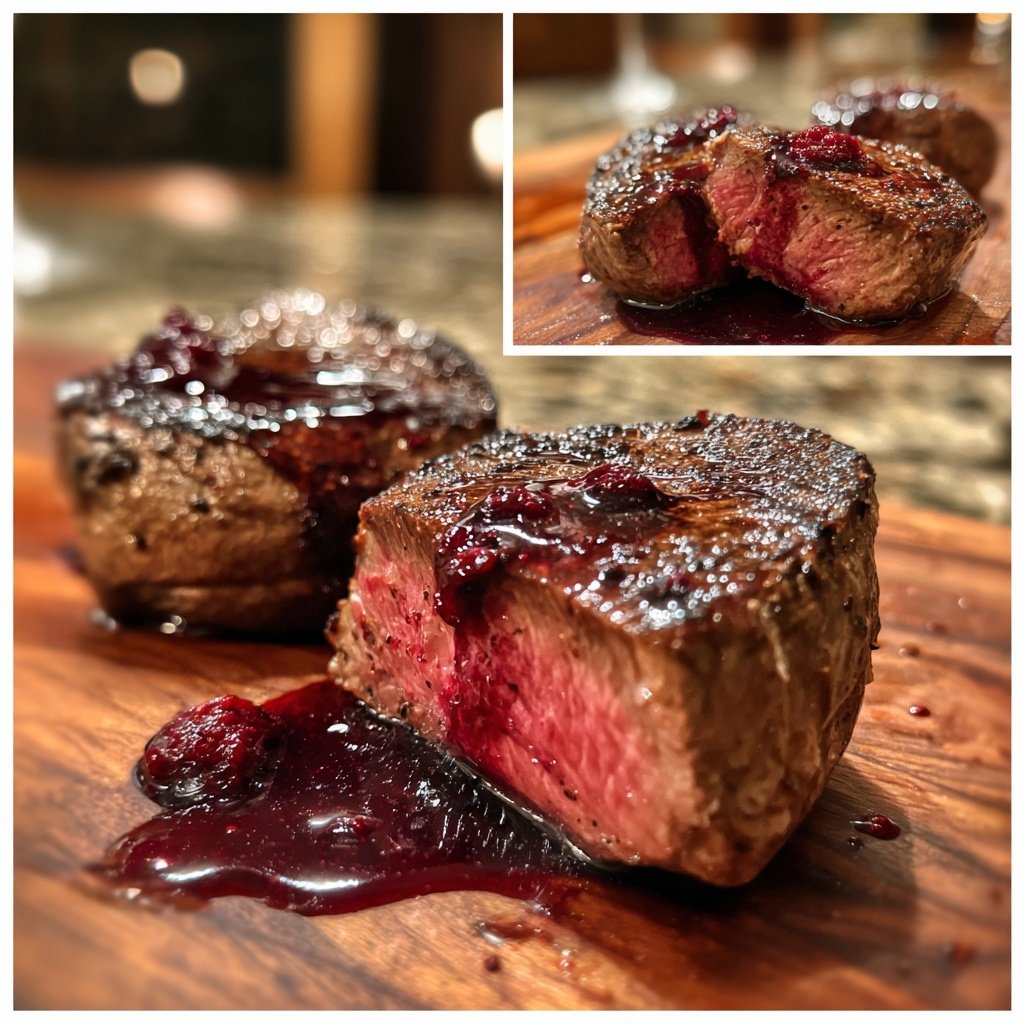
Why You'll Love This Recipe
- Juicy filet mignon cooked to perfection
- Luxurious red wine reduction that enhances the flavors
- Impressive enough for special occasions or date nights
Understanding Filet Mignon
Filet mignon is renowned for its tenderness and buttery flavor, making it a sought-after cut of beef. Sourced from the tenderloin, this steak offers a luxurious bite that pairs beautifully with the robust flavors of a red wine reduction. To enhance the texture, be sure to select steaks that have a bright red color and a good amount of marbling, which indicates adequate fat content. This marbling not only lends flavor but also helps maintain juiciness as you cook.
When preparing filet mignon, consider letting the meat come to room temperature before cooking. This step ensures even cooking throughout the steak and helps prevent the outside from overcooking while waiting for the center to reach the desired doneness. A quick rest of 15-20 minutes allows the fibers to relax, resulting in a more succulent bite once cooked.
The Art of Searing
Searing the filet mignon is a critical technique that locks in moisture and creates a delightful crust. Start with a hot skillet to achieve a Maillard reaction—the lovely browning that adds flavor. If you notice excessive smoke, lower the heat slightly. I find that a medium-high heat works best, reaching a temperature of around 400°F helps attain the perfect sear without compromising the interior tenderness.
The timing of the sear is essential for achieving your desired doneness; aim for 4-5 minutes on each side for a perfect medium-rare. It's important not to overcrowd the pan, as this can lower the skillet's temperature and result in steaming rather than searing. If you're cooking multiple steaks, consider using two skillets or searing in batches to maintain that desirable golden-brown crust.
Elevating the Sauce
The red wine reduction is what transforms a simple steak dinner into a gourmet experience. Choosing the right wine is crucial—Cabernet Sauvignon or Merlot not only offers depth of flavor but also complements the richness of the filet mignon beautifully. As the wine reduces, the sugars concentrate, balancing acidity and enhancing the sauce's depth. Monitor the simmering process closely; you want a reduction that coats the back of a spoon without being overly thick.
For added complexity, feel free to enhance the sauce with a dash of balsamic vinegar or a teaspoon of Dijon mustard as it thickens. These additions bring a slight tanginess counteracting the richness of the butter. If you find the sauce too salty after adding butter, a splash of water can help balance the flavors without losing the essence of your reduction.
Ingredients
Gather the following ingredients before you start cooking:
Ingredients
- 2 filet mignon steaks (6-8 oz each)
- 1 cup red wine (preferably Cabernet Sauvignon)
- 2 tablespoons butter
- 1 shallot, minced
- Salt and pepper to taste
- Olive oil for cooking
With your ingredients prepped, you're ready to make an unforgettable meal!
Instructions
Follow these steps to create your filet mignon with red wine reduction:
Prepare the Steaks
Take the filet mignon out of the refrigerator and season generously with salt and pepper. Let it rest at room temperature for 15-20 minutes before cooking.
Sear the Steaks
In a skillet over medium-high heat, add olive oil and heat until shimmering. Place the steaks in the pan and sear for about 4-5 minutes on each side for medium-rare. Once cooked, transfer the steaks to a plate and cover with foil to keep warm.
Make the Red Wine Reduction
In the same skillet, add the minced shallot and sauté for 1 minute until fragrant. Pour in the red wine and scrape the bottom of the pan to deglaze. Allow it to simmer and reduce by half, about 5-7 minutes.
Finish the Sauce
Remove from heat and stir in the butter until melted and combined. Adjust seasoning if necessary.
Serve
Slice the filet mignon and plate it. Drizzle the red wine reduction over the top and serve immediately.
Enjoy your delicious homemade filet mignon!
Pro Tips
- For the best flavor, opt for a good quality red wine when making the reduction. This makes a significant difference in taste. Additionally, let the meat rest after cooking for a few minutes to ensure juiciness.
Make-Ahead Tips
To prepare ahead of time, you can make the red wine reduction in advance. Once it's cooled, store it in an airtight container in the refrigerator for up to three days. To reheat, gently warm it in a saucepan over low heat, adding a splash of water if needed to restore its glossy texture. This technique saves time during your dinner party and allows you to focus on perfecting the steak.
Filet mignon itself is best cooked fresh but can be seasoned and rested at room temperature before cooking. If you're freezing the steaks, wrap them tightly in plastic wrap and then foil to prevent freezer burn. When ready to use, thaw them overnight in the refrigerator for optimal texture and flavor preservation.
Serving Suggestions
For a delightful presentation, consider slicing the filet mignon against the grain into medallions before plating. This not only makes it easier to eat but also showcases the beautifully seared exterior. Arrange it with a generous drizzle of the red wine reduction and garnish with fresh herbs like thyme or rosemary for an aromatic touch.
Pair your filet mignon with classic sides like creamy mashed potatoes or roasted seasonal vegetables. Dark, leafy greens or a crisp salad can provide a refreshing contrast to the rich steak and sauce. If you want to elevate the dining experience further, serve with a side of garlic butter sautéed mushrooms to complement the earthy tones of the dish.
Troubleshooting Common Issues
If you find that your steak is overcooked or uneven, this can happen if the skillet isn't hot enough or if the steaks were too cold before cooking. Ensure your skillet is preheated properly, and always consider using a meat thermometer; aim for an internal temperature of 130°F for medium-rare. Letting the steaks rest after cooking also redistributes juices, enhancing the overall outcome.
Should your red wine reduction end up too acidic, a small amount of honey or sugar can be added to balance the flavors. Likewise, if it seems too thin after reducing, continue simmering while stirring until it thickens to your desired consistency. Always taste as you go, adjusting the seasoning and flavor profile to your preference.
Questions About Recipes
→ Can I use any type of wine for the reduction?
While you can experiment, a full-bodied red wine like Cabernet Sauvignon or Merlot works best for depth of flavor.
→ How do I know when the filet mignon is done?
Use a meat thermometer. For medium-rare, aim for an internal temperature of 130-135°F.
→ Can I prepare the sauce in advance?
Yes, you can make the sauce ahead of time and warm it up just before serving. Just be sure to whisk in some additional butter for richness.
→ What side dishes pair well with filet mignon?
Creamy mashed potatoes, asparagus, or sautéed green beans complement filet mignon wonderfully.
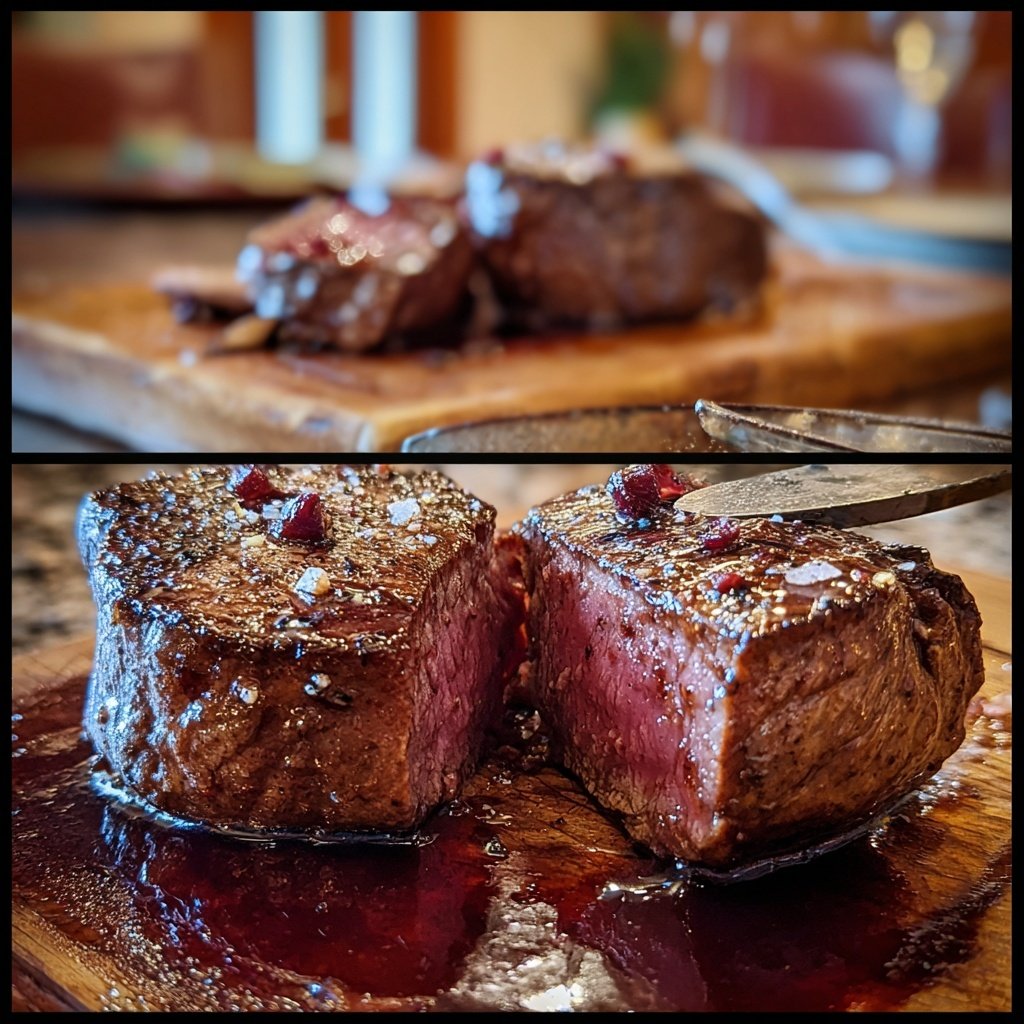
Filet Mignon with Red Wine Reduction
Created by: Cecilia Grant
Recipe Type: Everyday World Food Ideas
Skill Level: Intermediate
Final Quantity: 2 servings
What You'll Need
Ingredients
- 2 filet mignon steaks (6-8 oz each)
- 1 cup red wine (preferably Cabernet Sauvignon)
- 2 tablespoons butter
- 1 shallot, minced
- Salt and pepper to taste
- Olive oil for cooking
How-To Steps
Take the filet mignon out of the refrigerator and season generously with salt and pepper. Let it rest at room temperature for 15-20 minutes before cooking.
In a skillet over medium-high heat, add olive oil and heat until shimmering. Place the steaks in the pan and sear for about 4-5 minutes on each side for medium-rare. Once cooked, transfer the steaks to a plate and cover with foil to keep warm.
In the same skillet, add the minced shallot and sauté for 1 minute until fragrant. Pour in the red wine and scrape the bottom of the pan to deglaze. Allow it to simmer and reduce by half, about 5-7 minutes.
Remove from heat and stir in the butter until melted and combined. Adjust seasoning if necessary.
Slice the filet mignon and plate it. Drizzle the red wine reduction over the top and serve immediately.
Extra Tips
- For the best flavor, opt for a good quality red wine when making the reduction. This makes a significant difference in taste. Additionally, let the meat rest after cooking for a few minutes to ensure juiciness.
Nutritional Breakdown (Per Serving)
- Calories: 480 kcal
- Total Fat: 30g
- Saturated Fat: 13g
- Cholesterol: 105mg
- Sodium: 70mg
- Total Carbohydrates: 6g
- Dietary Fiber: 0g
- Sugars: 1g
- Protein: 48g